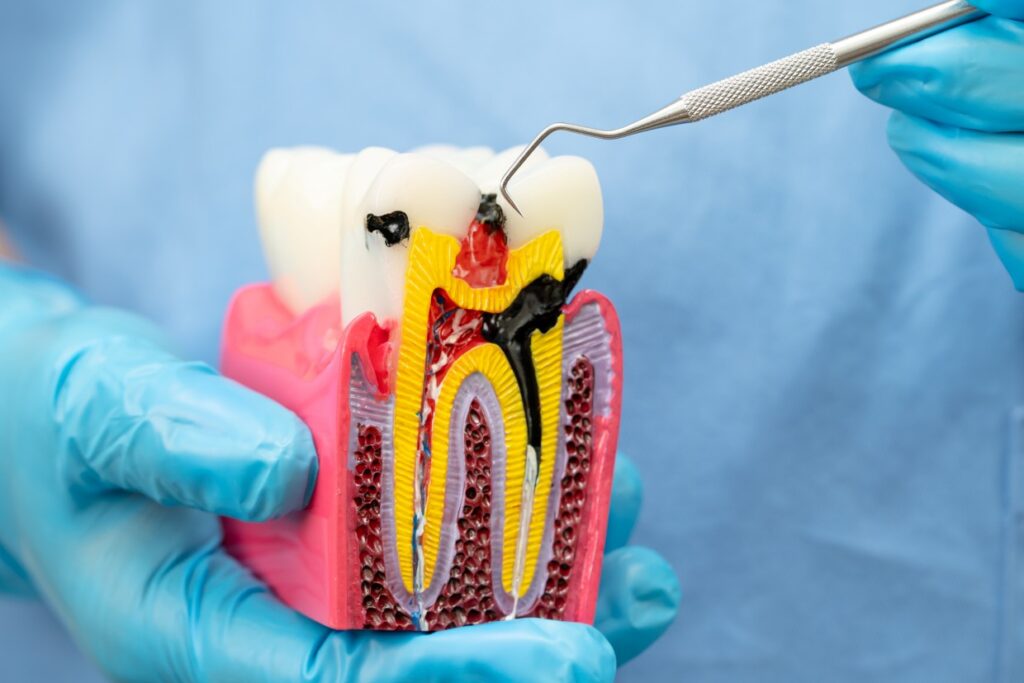
What Is Root Canal Therapy?
Every tooth contains a soft inner chamber called the pulp, which houses the nerves, blood vessels, and connective tissue that helped the tooth develop. Once a tooth is fully mature, the pulp is no longer essential to the tooth’s function. The tooth receives all the nourishment it needs from the surrounding tissue.
When bacteria penetrate deep into a tooth through untreated decay, a crack, or a traumatic injury, they reach the pulp and cause an infection. Left untreated, that infection spreads into the bone, forms an abscess, and can become a serious health concern.
Root canal therapy removes the infected pulp, cleans and shapes the inner canals of the tooth, and seals the space to prevent reinfection. The tooth remains in place, fully functional, and is typically protected with a crown afterward to restore its strength.
The alternative to a root canal is extraction. Saving the natural tooth is almost always the better long-term clinical choice. A root canal followed by a crown is more cost-effective over time than an extraction followed by an implant or bridge, and nothing functions quite like your original tooth.
Signs You May Need a Root Canal
Not every case presents with obvious, dramatic symptoms. Some infections develop slowly and quietly. Common indicators that something is wrong include:
- Persistent toothache that does not go away on its own, especially pain that is throbbing or severe
- Sensitivity to hot or cold that lingers for more than a few seconds after the source is removed
- Pain when biting or chewing on a specific tooth
- Darkening or discoloration of a tooth compared to its neighbors
- Swelling or tenderness in the gum tissue near a tooth
- A pimple-like bump on the gum near a painful tooth, which may indicate a draining abscess
- A tooth that was injured by trauma, even if it does not currently hurt
It is also worth noting that some teeth requiring root canal therapy cause no pain at all. This is why routine dental exams at Lake Forest Dental matter. Dr. Patel identifies infections on X-rays and clinical examination before they become emergencies. Patients in University City, Clayton, and throughout the Hanley Road corridor who keep up with their preventive care consistently avoid the more urgent and expensive version of this conversation.
What to Expect During Root Canal Therapy at Lake Forest Dental
The procedure sounds more intimidating than it is. Here is what actually happens:
Step 1: Diagnosis and Treatment Planning
Dr. Patel takes digital X-rays of the affected tooth and surrounding bone. He evaluates the extent of the infection, the anatomy of the root canals, and whether any additional treatment such as antibiotics is needed before the procedure begins. You receive a clear explanation of what he found and what the treatment involves before anything is scheduled.
Step 2: Anesthesia
The area around the tooth is thoroughly numbed with local anesthesia. Dr. Patel takes the time to make sure you are completely comfortable before proceeding. Patients who have avoided the dentist for years out of fear of this procedure are consistently surprised by how manageable it is once the tooth is properly anesthetized.
Step 3: Access and Pulp Removal
A small opening is made in the top of the tooth to access the pulp chamber. Using precision instruments, Dr. Patel removes the infected pulp tissue from the chamber and each root canal.
Step 4: Cleaning, Shaping, and Irrigation
The canals are carefully cleaned, shaped, and irrigated with an antimicrobial solution to eliminate bacteria and debris. This is the most technically demanding part of the procedure and where Dr. Patel’s commitment to evidence-based technique and continuing education makes a direct difference in the outcome.
Step 5: Sealing the Canals
Once the canals are thoroughly cleaned and dried, they are filled with a biocompatible material called gutta-percha and sealed to prevent reinfection.
Step 6: Temporary or Permanent Restoration
In most cases, a temporary filling is placed at the end of the root canal appointment. A follow-up visit is scheduled to place a permanent crown over the tooth, which protects it from fracture and restores full function. Because Dr. Patel handles both the root canal and the crown at Lake Forest Dental, the transition between these two steps is seamless.
Root Canal Therapy and the Crown That Follows
A tooth that has undergone root canal therapy is more brittle than a vital tooth because it no longer has a blood supply running through it. Without a crown, a back tooth in particular is at significant risk of fracturing under normal biting forces. A fractured tooth often cannot be saved.
The crown is not optional for most root canal cases. It is the step that protects the investment you just made in keeping your natural tooth. Dr. Patel will discuss this with you at your initial appointment so you understand the full scope of treatment and the associated costs before you begin.
Patients near The Clayton Business District, Ladue, and throughout the Brentwood and Richmond Heights communities appreciate this kind of upfront transparency. There are no surprise recommendations after the root canal is already done.
When a Referral Is Necessary
Dr. Patel handles the majority of root canal cases in-house at Lake Forest Dental. There are situations where the anatomy of a tooth’s root system is unusually complex, where a previous root canal requires retreatment, or where the case warrants the specialized equipment of an endodontist. In those instances, Dr. Patel will refer you to a trusted specialist and communicate directly with that provider to ensure continuity of care.
This kind of clinical honesty is part of how Lake Forest Dental operates. Patients near Washington University in St. Louis and throughout the University City and Maplewood communities can trust that Dr. Patel recommends what is genuinely right for their tooth, not what is most convenient for the practice schedule.
Dental Emergencies and Urgent Care at Lake Forest Dental
A severe toothache, facial swelling, or a tooth that has been knocked out are not situations that should wait for a routine appointment opening. Lake Forest Dental makes every effort to see patients experiencing dental pain or emergencies as quickly as possible.
If you are in the Clayton, Richmond Heights, or surrounding area and are dealing with acute tooth pain, call (314) 725-2232 directly. Do not manage an oral infection with over-the-counter pain relievers and hope it resolves. Dental infections can spread and they require clinical treatment, not just pain management.
Making Root Canal Therapy Affordable in St. Louis
Root canal therapy is typically covered under major restorative benefits in most dental insurance plans, often at 50 to 80 percent after the deductible is met. The crown that follows is generally covered as well. Coverage details vary significantly by plan, and the filing process matters.
If You Have Dental Insurance
Lake Forest Dental’s staff contacts your insurance carrier directly to verify your benefits before treatment begins. We accept assignment of benefits and handle all claims filing on your behalf. Patients from Clayton, Ladue, and the surrounding school districts consistently tell us that having someone in their corner on the insurance side removes a significant amount of stress from an already stressful situation. You will know your out-of-pocket costs before you sit in the chair.
The Lake Forest Dental Membership Club
For patients without insurance, the Lake Forest Dental Membership Club provides 20% savings on all treatment, including root canal therapy and the crown that follows. There are no waiting periods, which means if you need treatment now, you can access the discount immediately. Uninsured patients in Maplewood, University City, and Richmond Heights facing an unexpected root canal find that membership significantly reduces the financial impact of urgent care.
Why St. Louis Patients Trust Dr. Patel for Root Canal Therapy
The outcome of a root canal depends heavily on the precision of the cleaning and shaping process and the quality of the seal that follows. Dr. Patel’s background in biology and his ongoing investment in continuing education means he brings current clinical standards to every root canal procedure at Lake Forest Dental.
His calm, unhurried approach is particularly valued by patients who arrive anxious about the procedure. Many patients in the Clayton and Brentwood communities who have been putting off treatment because of fear of root canals report afterward that the procedure was far more manageable than they anticipated. That is not an accident. It is the result of thorough anesthesia, clear communication, and a dentist who does not rush.
Dr. Patel also volunteers with Give Kids A Smile and dedicates monthly time to treating patients working to get back on their feet. His commitment to the St. Louis community is built into how the practice operates. When you choose Lake Forest Dental for your care, you are choosing a practice that takes its responsibility to this community seriously.
Serving Patients Near Clayton Road and Across St. Louis
Lake Forest Dental is located at 7937 Clayton Rd, St. Louis, MO 63117, easily accessible for patients from:
- Clayton and Richmond Heights along the Clayton Road corridor
- Ladue and Brentwood for patients seeking in-house root canal therapy close to home
- University City and Maplewood communities who need urgent or scheduled endodontic care
- Students, faculty, and staff near Washington University in St. Louis
- Professionals near The Clayton Business District and along Hanley Road
- Families throughout the local school districts who want a trusted provider for both routine and urgent dental needs
Schedule Your Root Canal Evaluation in St. Louis Today
If you are in pain, if a tooth has been bothering you for weeks, or if you have been told you need a root canal and want a second opinion from a doctor who will be straightforward with you, call Lake Forest Dental today.
Saving your natural tooth is almost always worth it. Dr. Patel will tell you honestly whether root canal therapy is the right path for your specific situation and what the full treatment plan looks like before you commit to anything.