
Finding out that you need several types of dental treatment can feel overwhelming.
You may have gum inflammation, a damaged tooth, an older restoration that needs attention, or missing teeth you eventually want to replace. When several concerns appear on one treatment plan, a natural question is: What should be treated first?
There is no universal order that applies to every patient.
At Lake Forest Dental, treatment planning begins by looking at your oral health as a whole, listening to your concerns, and identifying which issues deserve earlier attention, which treatments depend on other steps, and which concerns may reasonably be addressed later.
The goal is to turn several dental needs into a clear, individualized plan rather than simply handing you a long list of procedures.
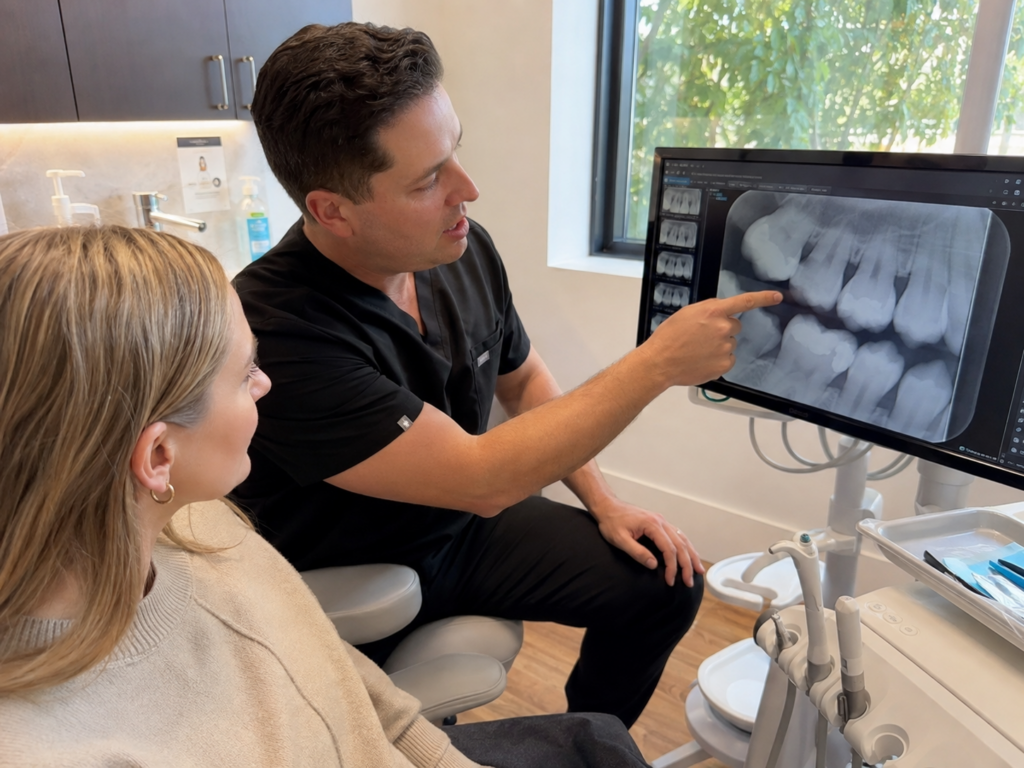
Start by Understanding the Full Picture
Before deciding what should come first, your dentist needs to understand everything that is happening.
Comprehensive dental exams can include evaluating your:
- Teeth
- Gums
- Existing fillings, crowns, or other restorations
- Bite
- Missing teeth
- Areas of discomfort
- Other changes in your oral health
Diagnostic information and your symptoms help the dentist determine not only which conditions are present but also how those concerns may affect one another.
Your priorities matter too.
Your dentist may ask about discomfort, changes you have noticed, previous dental experiences, concerns about particular treatments, and what you hope to accomplish.
Taking time to listen before recommending care helps create a plan around the person rather than simply producing a list of procedures.
Urgent Dental Concerns Often Deserve Earlier Attention
When several problems are present, concerns requiring prompt evaluation will generally receive higher priority.
Examples may include:
- Significant dental pain
- Swelling
- Dental trauma
- Signs of active infection
- A tooth that has become significantly damaged
The appropriate treatment depends on the diagnosis.
A painful tooth, for example, does not automatically need to be removed. Depending on what the dentist finds and whether the tooth can be restored appropriately, root canal therapy, restorative treatment, extraction, or another approach may be considered.
That is why diagnosis comes before treatment.
Two patients can describe similar symptoms while ultimately needing very different care.
Does the Most Painful Tooth Always Come First?
Not necessarily.
Pain provides useful information, but it is only one factor in establishing dental treatment priorities.
Some dental conditions can progress with relatively few noticeable symptoms. A tooth may have decay or structural damage without causing severe discomfort, and gum disease does not always produce the kind of toothache that immediately prompts someone to seek care.
Your dentist therefore considers both what you are feeling and what the examination shows.
This can help identify concerns that deserve attention even when they are not currently disrupting everyday life.
Controlling Active Disease May Be an Early Priority
After urgent problems are evaluated, another important goal may be controlling active dental or periodontal disease.
If periodontal disease is present, for example, gum disease treatment may become an important part of the overall treatment plan.
Lake Forest Dental provides non-surgical periodontal care that may include scaling and root planing, periodontal maintenance, and selected adjunctive therapies based on individual needs.
The gums and supporting tissues play an important role in the health and stability of the teeth.
However, periodontal treatment does not automatically have to happen before every other dental procedure.
Treatment sequence still depends on the diagnosis and whether another concern requires more immediate attention.
Teeth at Risk of Further Damage May Need Treatment
Another consideration is whether delaying treatment could make a damaged tooth more difficult to restore.
A tooth weakened by decay, a large existing restoration, structural damage, or another problem may need restorative care even if it is not causing significant pain.
Depending on the condition of the tooth, treatment may involve a filling, dental crown, root canal therapy, or another restorative approach.
The objective is not to perform as much treatment as possible.
It is to identify situations where timely care may help preserve healthy tooth structure, restore function, or prevent the problem from becoming more complicated.
Sometimes One Treatment Depends on Another
Dental treatment is often interconnected.
Suppose you want to replace a missing tooth but also have active oral health concerns. Your dentist may recommend addressing those concerns before moving forward with the final tooth replacement.
Certain restorations may also depend on the health and stability of neighboring teeth, gums, or supporting structures.
This is why choosing only the concern that bothers you most does not always create the most logical treatment sequence.
Your dentist considers how each part of the plan may affect what comes next.
Explaining those relationships is an important part of transparent treatment planning.
Where Does Tooth Replacement Fit Into the Plan?
Missing teeth can affect chewing, appearance, and overall dental function, but the appropriate timing for replacement varies.
Lake Forest Dental provides several replacement options, including bridges and dental implants.
Implant treatment may range from replacing a single tooth to implant-supported bridges or dentures, depending on the patient’s anatomy, oral health, and individual needs.
Before recommending implant treatment, the dentist may consider:
- Bone support
- Gum health
- Neighboring teeth
- The number and location of missing teeth
- Other planned dental treatment
- Individual treatment goals
Lake Forest Dental performs implant placement and restoration in-house and provides selected bone grafting when clinically appropriate.
However, the right replacement strategy is individualized rather than assuming implants are automatically the best option for every missing tooth.
What If a Tooth Cannot Be Predictably Restored?
Preserving natural teeth is an important goal when clinically appropriate.
However, there are situations in which retaining a particular tooth may not be the best long-term option.
After evaluating the tooth’s condition, remaining structure, supporting tissues, and overall prognosis, tooth extraction may sometimes be recommended.
Lake Forest Dental performs routine and surgical extractions, including selected wisdom tooth cases.
More complex cases may be referred to an appropriate specialist when their needs extend beyond what is appropriate to manage within the general dental setting.
If extraction becomes part of the treatment plan, your dentist can also discuss whether tooth replacement should be considered and how that decision fits into the larger treatment sequence.
Where Does Cosmetic Dentistry Fit?
Cosmetic goals can also be part of a comprehensive dental treatment plan.
However, when active disease or significant functional concerns are present, the dentist may recommend addressing those needs before elective cosmetic care.
The appropriate timing depends on the health of the teeth and gums, other planned treatment, and the patient’s individual goals.
Considering cosmetic care within the broader oral health picture helps treatment decisions support both appearance and function.
Do I Have to Complete Everything at Once?
Not necessarily.
When several dental treatments are recommended, care may sometimes be organized into phases rather than treated as one large project.
Your dentist may explain:
- Which concerns deserve earlier attention
- Which problems may become more difficult to treat if they progress
- Which procedures depend on another treatment being completed first
- Which findings may reasonably be monitored
- Which elective treatments can be considered later
The exact sequence depends on your individual circumstances.
A phased approach can also make a larger treatment plan easier to understand by giving each stage a clear purpose before moving on to the next.
Can My Priorities Affect the Treatment Plan?
Yes.
Treatment planning should be a conversation, not simply a set of instructions handed to you without explanation.
Your clinical needs help determine which concerns deserve earlier attention and which may reasonably be monitored or addressed later. Within those considerations, your personal concerns and goals still matter.
Perhaps one area makes chewing difficult. Maybe you are anxious about a particular procedure or want to understand your alternatives before deciding. You may simply want the treatment plan explained in smaller stages so it feels more manageable.
Lake Forest Dental’s relationship-first approach emphasizes listening to these concerns and discussing findings, alternatives, priorities, and the reasoning behind recommendations.
When Might a Specialist Become Part of the Plan?
Providing comprehensive dental care does not mean every case should automatically be treated in one office.
Lake Forest Dental provides a broad range of care in-house, including most root canal treatment, implant placement and restoration, non-surgical periodontal therapy, and routine and selected surgical extractions.
When a case requires specialized expertise, equipment, or surgical care beyond the practice’s scope, referral may become part of the treatment plan.
Appropriate referral is not separate from comprehensive care. It is part of making sure each patient receives care suited to their individual needs.
A Treatment Plan Should Make the Next Step Clear
Seeing several dental concerns on an examination does not mean everything has the same urgency or needs to be completed simultaneously.
A thoughtful treatment plan organizes those findings according to your diagnosis, current oral health, risk of progression, function, long-term needs, and personal priorities.
At Lake Forest Dental, that process begins with listening.
The goal is to help you understand what the dentist sees, why certain concerns may deserve earlier attention, what alternatives may be available, and how each stage fits into your overall oral health.
If you have several dental concerns and are unsure where to begin, contact Lake Forest Dental to schedule an evaluation.
Together, you and your dental team can develop a clear, individualized treatment plan that organizes your care into appropriate and manageable steps.


